Friday, September 30, 2011

Two Views at the Surrey Museum

While I was at the City of Vancouver Archives today I noticed a striking poster for a show at the Surrey Museum which looks very interesting. It's an exhibition of photographs of WWII Japanese internment camps by Ansell Adams and Leonard Frank. They are also having a special community talk and tea on October 22.

Here's the info from their website:

Two Views

Experience two perspectives of Japanese Canadians and Japanese Americans during their internment in the 1940s. The reality of forced separation and uprooting of families is portrayed through striking black and white photographs by Ansell Adams and Leonard Frank. Adams highlighted the personal stories of those who were interned, while Frank documented the government process, creating a contrasting and thought-provoking exhibit. Presented by Japanese Canadian National Museum.
On display September 13-October 29


Japanese Internment in WWII Canada

Join Raymond Nakamura from the Japanese Canadian National Museum to learn about Japanese Canadian history, the Canadian internment of its Japanese citizens during WWII and his own family's experiences in this troubling period. Please pre-register
1 session $6 (16+yrs)
Saturday, October 22
1:00pm-2:00pm
4261335

Tea and Tour: Two Views Exhibit:

Join Museum staff for a guided tour of the Two Views exhibit to learn the stories behind the images, the history of the Japanese interment in Canada and the stories of Surrey’s pre-war Japanese population. Then chat about the photographs and this aspect of history over tea. Please pre-register

1 session $5 (16+yrs)
Saturday, October 22
2:30pm-3:30pm
4261353

Wednesday, September 28, 2011

Why Go to War? A Community Dialogue at the Firehall Arts Centre

You are invited to the first in a series of community dialogues this Sunday at the Firehall Arts Centre:

Come tour the historic Firehall building and join us for the first of our three-part series of Community Dialogue Sessions focusing on different aspects of war.

Featuring WWII veterans including Wes Lowe, Frank Wong, George Chow and author and Chinese Canadian Museum Curator Larry Wong, this weekend's talk will look at the motivations behind why individuals chose to enlist. Excerpts from the documentary film "Unwanted Soldiers" will be shown.


You are invited on a guided tour of the Firehall at 2 p.m.

Community Dialogue Session: Why Go To War? begins at 3pm


Created to compliment the Firehall's production on VIMY opening November 2, the following two dialogue sessions in the series will take place October 17 and 24 and cover the topics of the evolution of art at war and the different roles of women during war.

Monday, September 26, 2011

Invisible Women: WWII Aboriginal Servicewomen in Canada by Grace Poulin

Isn't it fantastic when you're digging for historical information and you've found someone has written a book based on the very topic you're after? Such was my luck when I discovered that Grace Poulin has written about Aboriginal women in Canada who served in WWII. I chatted with Grace on the phone today and she told me that she became interested in Canada's Aboriginal history after she took a course on the changing roles of Aboriginal women. The professor showed the class a photo of a woman in uniform and remarked "There's a thesis for someone...." Well, Grace decided she would research that photograph which lead her spending several months tracking down vets and traveling to interview them.

One of the women she interviewed was Mary Greyeyes, a woman from Saskatchewan who eventually married and settled in Vancouver. She was the first aboriginal woman to join the Canadian Women's Army Corps. After the war she became Mary Reid and eventually moved to Vancouver and lived on Commercial Drive for 36 years. Sadly, she died in March, 2011.

You can order the book directly from Grace Poulin and proceeds from the publication go towards the making of a documentary based on the book. I can't wait to read it!

Saturday, September 24, 2011

Mrs. Vancouver

I have been getting re-acquainted with micro-fiche, which I hate. Maybe I can make friends with the medium because it does contain some lovely gems such as this piece from the Vancouver Sun (Jan 15, 1943), written in that particularly chipper and patronizing tone of wartime cheerleading directed at women. How would you rate as Mrs Vancouver?

Feeling Proud, Mrs. Vancouver?

Well, You've Every Right To

by Ruth Millet


When Mrs. Vancouver started counting up the new skills she had acquired in the last year she couldn't help feeling a little proud of herself.

She had learned enough first aid so that she wouldn't stand and wring her hands if she should see someone badly hurt.

She had learned how to make sick patients comfortable.

She had learned what to do if an incendiary bomb should fall on the roof of her house.

She had learned what is under the hood of her automobile, and how to change a tire.


BACK TO SIMPLE LIFE

She had learned to grow something for her dining room table besides a floral centrepiece.

She had learned to can fruits and vegetables.

She had learned how to knit.

She had learned a simple yardstick for a balanced diet.

She had learned to carry her own packages instead of saying "Send it, please."

She had learned to get places without a car.

She had learned to put the money she would like to spend on a new hat into war bonds.

She had learned to entertain simply and inexpensively.

She had learned to save--everything from paper and bacon to grease.

She had learned how to ride a bicycle--if not with grace, still without serious accident.

That is quite a list for one year's time. No wonder Mrs. Vancouver feels she is quite a girl.


Monday, September 19, 2011

The Red Cross

Some of my earliest memories are from Red Cross meetings in Cactus Lake, Saskatchewan. My mother was a member for over fifty years, meeting with a group of women who were always working on a relief project of some sort. In the Cactus Lake hall there's a black and white photo of the group from the 1960's and there I am as an infant on my mom's knee. I remember the women making up kits of school supplies to send to some faraway country and they were always sewing--making quilts and "layettes". (Layettes are kits for new moms including blankets, bibs, burping cloths and diapers, usually all handmade.) Red Cross suppers with turkey, mashed potatoes, gravy, cabbage rolls, spaeztle, jellied salads and a wide variety of pies reflected the German and Ukrainian heritage of our hamlet and the surrounding farms. My grandma May was in the Red Cross during WWII and so she was one of the many women of Canada creating "ditty bags" and "comfort kits" for sailors and soldiers. Red Cross kits for able bodied men contained 1 small diary, 1 pencil, 1 jack knife, 1 comb, 1 small note book and envelope, 1 tube shaving cream, 1 deck of cards, 1 "housewife" (sewing case), and 5 postcards. They sewed up the cloth bags, filled them, and sent them off. Red Cross volunteers also prepared surgical supplies. Five years ago the Cactus Lake Red Cross celebrated their 65th anniversary.

The North Vancouver branch of the Red Cross was formed in 1914 and its first mobile blood donor clinic was held in 1947.

During the First World War the hall of the West Vancouver Presbyterian Church was utilized for Red Cross quarters as well as for church services. The Vancouver Red Cross operated a WWII version of a food truck: a mobile canteen for the Air Raid Precaution events such as this spectacular fire drill on Kits Beach.

November 12, 1941

The first person to donate blood to the Red Cross in Vancouver was a “bantamweight” New Westminster grocer named Jimmy Muir. “Last week,” the Province reported, “the mayor (Jack Cornett) drew Muir's name from a hat and gave him the honor of being the first person in Vancouver to contribute blood in the Red Cross 'blood bank'.” Another early donor was David Smith, of West 12th Avenue, “a carpenter in the Boeing factory on Coal Harbour, where 500 workmen have each offered a pint of blood.” The blood was to be sent to the war zones.

http://www.vancouverhistory.ca/chronology1941.htm

The Numbers:

The Canadian Red Cross Corps eventually numbered 15,000 women. Of that group, the Overseas Detachment of 641 volunteers served in England, France, Belgium, the Netherlands, Germany and parts of Africa.

They drove ambulances - often in blackouts, supported patients and assisted staff in military hospitals. In London, they staffed four “Maple Leaf” hostels and two canteens as well as assisting civilians in England. A number of volunteers served as welfare officers with military hospitals in the United Kingdom, Africa, Italy, northern Europe and Korea. Other activities included helping with the rehabilitation of the war-blinded and coordinating the distribution of parcels to prisoners of war.

http://www.redcross.ca/article.asp?id=13079&tid=001


Friday, September 16, 2011

Buddies of Bud the Spud


A honeybee laden with pollen sips nectar at the Vancouver City Hall Community Garden

Besides being morale boosters, Victory gardens in Vancouver gave people "pep and energy" for the war effort and provided food for forces and the people of Britain. After the war Canadians sent food overseas to nourish people in war torn countries. Today I chatted with John from Texas who has a community plot at Vancouver city hall. He said his mother grew up in a town that was called Victory Gardens, Texas.

One gets the impression that people on both sides of the Atlantic Ocean ate a lot of potatoes. While Canada has "Bud the Bud," wartime Britain had "Pete the Potato" who was one of the personified tubers created to promote healthy eating during WWIII. I recently watched an episode of Foyle's war called "They Fought in the Fields" in which three Land Girls (women in the Land Army) struggle to plant a field of potatoes before dark. Members of Land Army get to wear snappy uniforms and their diet is supplemented by farm food, but it is back-breaking work and they must have ate, slept, and dreamed of potatoes. Not to mention the turnips, which were another war time staple, even in the gardens at Buckingham Palace.

The Canadian war artist Bruno Bobak remembers being invited in to a family's home in appreciation for the liberation of Almelo, Holland:

"We had a four-course meal, but every course was potato,'' he says. "We had potato soup, potatoes with gravy, potatoes with brown sugar. They had almost no food left."

--The Telegraph Journal

Woolton Pie was a famous recipe named after the British Ministry of food made with simple, cheap, and wholesome ingredients.

"It was named after Frederick Marquis, Lord Woolton, the ex-managing director of a store chain called Lewis (mainly in the north of England) and ex-social worker, who was appointed Minister of Food in April 1940. Unglamorous his position may have been, but it was vital to the war effort. It says much for Woolton's personal charm that he was remarkably popular with the public, even when singing the praises of rissoles without beef, cakes without sugar and tea without tea leaves."

--www.carrotmuseum.com

Those who have the will to win,

Cook potatoes in their skin,

Knowing that the sight of peelings,

Deeply hurts Lord Woolton's feelings.

--http://www.homesweethomefront.co.uk

To Make Woolton pie you cut up potatoes (with the skins on so as not to hurt Wooly's feelings), "swedes", cauliflower and carrots, and spring onions, cover with vegtable stock and a teaspoon of oatmeal and cook it. By this I gather they mean boil it to within an inch of its life. This is your pie filling. You put this in a baking dish, cover it with more potatoes or pastry and cook it in the oven. You can read more about the fascinating story behind Woolton pie at the World Carrot Museum website.

Today in France, farmers plant potatoes in former battlefields which is still hazardous. In 2007 A woman in Italy found a WWII grenade in a bag of potatoes.

"Police said the pine cone-shaped grenade, which had no pin and was still active, was the same type used by U.S. soldiers in Europe in World War Two. Authorities believe the mix-up happened at a farm in France, where the grenade was plucked from the ground along with potatoes.

To the woman's relief, police and explosives experts in the small town of San Giorgio a Cremano, near Naples, recovered the grenade and safely detonated it on Wednesday."

--Reuters

Check out this website from Dundry Nurseries where you can here Potato Pete's song and even order a reproduction of his own cookbook. You can also watch a clip of a British tv show where they show how to plant and store potatoes and grow squash on top of your bomb shelter. You can also learn how to make your own potash!(?)

The Numbers:

It was estimated that between 1917 and 1919, over five million Victory Gardens had been planted in North America, which had produced some $1.2 billion in foodstuff productions.

By the end of 1943, there were more than 200 000 Victory Gardens in Canada producing 550 lbs of produce.

--wartimehouses.com


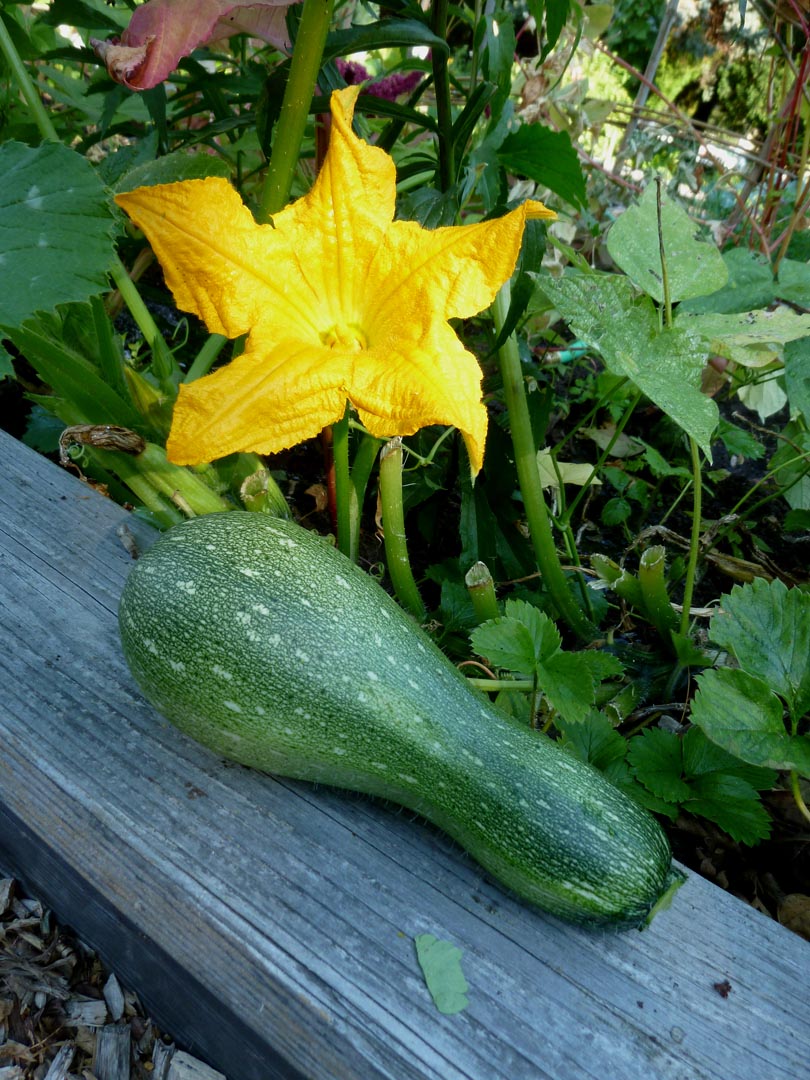
A lovely victory zucchini grown at the Simon Fraser Elementary garden at the community garden, Vancouver City Hall.

Dig for Victory!

Thursday, September 15, 2011

The Vancouver Police Museum: Where Death Rejoices

I went to the Vancouver Police Museum to see if they had any photos of Vancouver during the war years. Ironically, the most beautiful room in the museum is the autopsy room, a quiet, peaceful room suffused with natural light. The inscription above the door reads: Let idle talk be silenced. Let laughter be banished. This is the place where death rejoices to teach those who live."


Hanging on one wall is a tribute to members of the VPD who served in WWI.

There's also a display that tells the story of Raiichi Shirokawa, a police officer who served during the First World War:

Chief Constable Malcom Maclennan hired the first policeman belonging to a visible ethnic minority. Constable Raiichi Shirokawa (PC 198), a Japanese Canadian, was hired December 14, 1917 but served only a few months before members of the Japanese community allegedly complained he was being used only to spy on them. Faced with this opposition, Shirokawa resigned the following year on December 12, 1918. No negative remarks appear anywhere in his VPD records. He died in Vancouver May 30, 1959.

--Vancouver Police Museum

The Numbers:

WWI: The Canadian Japanese Association in British Columbia put forward a volunteer reserve force of 227 men, some of whom were later admitted into the military.

--Wikipedia

WWII: 22,000 Japanese Canadians (14,000 of whom were born in Canada) were interned in the 1940s.

--Ibid