Showing posts with label WWI. Show all posts

Tuesday, October 25, 2011

The White Roses: Nurses in WWI


Last night Sheila Zerr and Nan Nartin, members of the BC Nursing History Society, spoke about the role of the Nursing Sisters during WWI. Zerr showed us a stained glass window in Vancouver that features an image of a "bluebird". Her skirt is well above her ankles and she is wearing sturdy boots. The story is that the skirts used to be longer, but they trailed in the mud of the battlefield so the sisters cut them and hemmed them shorter. In this way they are credited for introducing the shorter length of the flapper dresses in the 1920's.

Martin showed us an original cuff from a WWI uniform that is white and goes from the wrist to the elbow. It is detachable so it can be removed and cleaned, in fact it is still faintly blood-stained.

One of the mysteries of the uniform is this white rose at the back of the cape. Does anyone know the story behind this detail? According to Canadian author Gabriele Wills, there is an excellent book about nurses in WWI called The Roses of No Man's Land by Lyn MacDonald. Maybe that book tells the tale. Be sure to check out Gabriele's fantastic page about WWI, including facts about the medical front. You'll see the fabulous photo of Gabriele at the Vimy Memorial which I reproduced in the show in the gallery.

More than 2,800 Canadian Nursing Sisters served with the Canadian Army Medical Corps during the First World War, often close to the front lines of Europe and within range of enemy attack. With their blue dresses and white veils, they were nicknamed the “bluebirds” and were greatly respected because of their compassion and courage.

www.veterans.gc.ca


WWI

• 6 nurses killed in hospital bombings

• 15 killed when their hospital ship, the Llandovery Castle was sunk

• 15 died of contagious diseases such tuberculosis, which killed several other nurses when they returned home

• bluebirds were the first women allowed to vote legally in Canada in a federal election


Monday, September 19, 2011

The Red Cross

Some of my earliest memories are from Red Cross meetings in Cactus Lake, Saskatchewan. My mother was a member for over fifty years, meeting with a group of women who were always working on a relief project of some sort. In the Cactus Lake hall there's a black and white photo of the group from the 1960's and there I am as an infant on my mom's knee. I remember the women making up kits of school supplies to send to some faraway country and they were always sewing--making quilts and "layettes". (Layettes are kits for new moms including blankets, bibs, burping cloths and diapers, usually all handmade.) Red Cross suppers with turkey, mashed potatoes, gravy, cabbage rolls, spaeztle, jellied salads and a wide variety of pies reflected the German and Ukrainian heritage of our hamlet and the surrounding farms. My grandma May was in the Red Cross during WWII and so she was one of the many women of Canada creating "ditty bags" and "comfort kits" for sailors and soldiers. Red Cross kits for able bodied men contained 1 small diary, 1 pencil, 1 jack knife, 1 comb, 1 small note book and envelope, 1 tube shaving cream, 1 deck of cards, 1 "housewife" (sewing case), and 5 postcards. They sewed up the cloth bags, filled them, and sent them off. Red Cross volunteers also prepared surgical supplies. Five years ago the Cactus Lake Red Cross celebrated their 65th anniversary.

The North Vancouver branch of the Red Cross was formed in 1914 and its first mobile blood donor clinic was held in 1947.

During the First World War the hall of the West Vancouver Presbyterian Church was utilized for Red Cross quarters as well as for church services. The Vancouver Red Cross operated a WWII version of a food truck: a mobile canteen for the Air Raid Precaution events such as this spectacular fire drill on Kits Beach.

November 12, 1941

The first person to donate blood to the Red Cross in Vancouver was a “bantamweight” New Westminster grocer named Jimmy Muir. “Last week,” the Province reported, “the mayor (Jack Cornett) drew Muir's name from a hat and gave him the honor of being the first person in Vancouver to contribute blood in the Red Cross 'blood bank'.” Another early donor was David Smith, of West 12th Avenue, “a carpenter in the Boeing factory on Coal Harbour, where 500 workmen have each offered a pint of blood.” The blood was to be sent to the war zones.

http://www.vancouverhistory.ca/chronology1941.htm

The Numbers:

The Canadian Red Cross Corps eventually numbered 15,000 women. Of that group, the Overseas Detachment of 641 volunteers served in England, France, Belgium, the Netherlands, Germany and parts of Africa.

They drove ambulances - often in blackouts, supported patients and assisted staff in military hospitals. In London, they staffed four “Maple Leaf” hostels and two canteens as well as assisting civilians in England. A number of volunteers served as welfare officers with military hospitals in the United Kingdom, Africa, Italy, northern Europe and Korea. Other activities included helping with the rehabilitation of the war-blinded and coordinating the distribution of parcels to prisoners of war.

http://www.redcross.ca/article.asp?id=13079&tid=001


Friday, September 16, 2011

Buddies of Bud the Spud


A honeybee laden with pollen sips nectar at the Vancouver City Hall Community Garden

Besides being morale boosters, Victory gardens in Vancouver gave people "pep and energy" for the war effort and provided food for forces and the people of Britain. After the war Canadians sent food overseas to nourish people in war torn countries. Today I chatted with John from Texas who has a community plot at Vancouver city hall. He said his mother grew up in a town that was called Victory Gardens, Texas.

One gets the impression that people on both sides of the Atlantic Ocean ate a lot of potatoes. While Canada has "Bud the Bud," wartime Britain had "Pete the Potato" who was one of the personified tubers created to promote healthy eating during WWIII. I recently watched an episode of Foyle's war called "They Fought in the Fields" in which three Land Girls (women in the Land Army) struggle to plant a field of potatoes before dark. Members of Land Army get to wear snappy uniforms and their diet is supplemented by farm food, but it is back-breaking work and they must have ate, slept, and dreamed of potatoes. Not to mention the turnips, which were another war time staple, even in the gardens at Buckingham Palace.

The Canadian war artist Bruno Bobak remembers being invited in to a family's home in appreciation for the liberation of Almelo, Holland:

"We had a four-course meal, but every course was potato,'' he says. "We had potato soup, potatoes with gravy, potatoes with brown sugar. They had almost no food left."

--The Telegraph Journal

Woolton Pie was a famous recipe named after the British Ministry of food made with simple, cheap, and wholesome ingredients.

"It was named after Frederick Marquis, Lord Woolton, the ex-managing director of a store chain called Lewis (mainly in the north of England) and ex-social worker, who was appointed Minister of Food in April 1940. Unglamorous his position may have been, but it was vital to the war effort. It says much for Woolton's personal charm that he was remarkably popular with the public, even when singing the praises of rissoles without beef, cakes without sugar and tea without tea leaves."

--www.carrotmuseum.com

Those who have the will to win,

Cook potatoes in their skin,

Knowing that the sight of peelings,

Deeply hurts Lord Woolton's feelings.

--http://www.homesweethomefront.co.uk

To Make Woolton pie you cut up potatoes (with the skins on so as not to hurt Wooly's feelings), "swedes", cauliflower and carrots, and spring onions, cover with vegtable stock and a teaspoon of oatmeal and cook it. By this I gather they mean boil it to within an inch of its life. This is your pie filling. You put this in a baking dish, cover it with more potatoes or pastry and cook it in the oven. You can read more about the fascinating story behind Woolton pie at the World Carrot Museum website.

Today in France, farmers plant potatoes in former battlefields which is still hazardous. In 2007 A woman in Italy found a WWII grenade in a bag of potatoes.

"Police said the pine cone-shaped grenade, which had no pin and was still active, was the same type used by U.S. soldiers in Europe in World War Two. Authorities believe the mix-up happened at a farm in France, where the grenade was plucked from the ground along with potatoes.

To the woman's relief, police and explosives experts in the small town of San Giorgio a Cremano, near Naples, recovered the grenade and safely detonated it on Wednesday."

--Reuters

Check out this website from Dundry Nurseries where you can here Potato Pete's song and even order a reproduction of his own cookbook. You can also watch a clip of a British tv show where they show how to plant and store potatoes and grow squash on top of your bomb shelter. You can also learn how to make your own potash!(?)

The Numbers:

It was estimated that between 1917 and 1919, over five million Victory Gardens had been planted in North America, which had produced some $1.2 billion in foodstuff productions.

By the end of 1943, there were more than 200 000 Victory Gardens in Canada producing 550 lbs of produce.

--wartimehouses.com


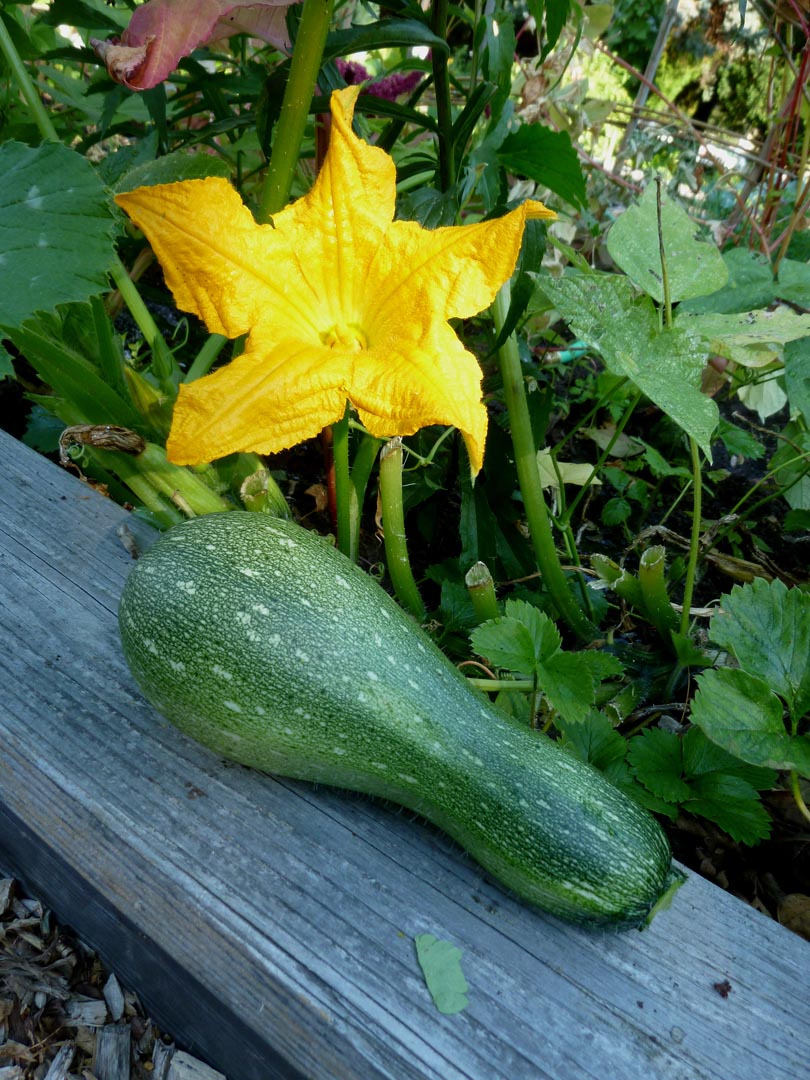
A lovely victory zucchini grown at the Simon Fraser Elementary garden at the community garden, Vancouver City Hall.

Dig for Victory!

Thursday, September 15, 2011

The Vancouver Police Museum: Where Death Rejoices

I went to the Vancouver Police Museum to see if they had any photos of Vancouver during the war years. Ironically, the most beautiful room in the museum is the autopsy room, a quiet, peaceful room suffused with natural light. The inscription above the door reads: Let idle talk be silenced. Let laughter be banished. This is the place where death rejoices to teach those who live."


Hanging on one wall is a tribute to members of the VPD who served in WWI.

There's also a display that tells the story of Raiichi Shirokawa, a police officer who served during the First World War:

Chief Constable Malcom Maclennan hired the first policeman belonging to a visible ethnic minority. Constable Raiichi Shirokawa (PC 198), a Japanese Canadian, was hired December 14, 1917 but served only a few months before members of the Japanese community allegedly complained he was being used only to spy on them. Faced with this opposition, Shirokawa resigned the following year on December 12, 1918. No negative remarks appear anywhere in his VPD records. He died in Vancouver May 30, 1959.

--Vancouver Police Museum

The Numbers:

WWI: The Canadian Japanese Association in British Columbia put forward a volunteer reserve force of 227 men, some of whom were later admitted into the military.

--Wikipedia

WWII: 22,000 Japanese Canadians (14,000 of whom were born in Canada) were interned in the 1940s.

--Ibid

Wednesday, September 14, 2011

Our Jewish Heroes

When I spoke with Donna Spencer, director of the play Vimy at the Firehall Arts Centre I was struck by an image she described from her visit to Vimy Ridge this summer. She said there are rows and rows of crosses on the graves of the German soldiers, and occasionally a headstone marking a Jewish German soldier's grave. In both World Wars Jewish Vancouverites from Germany, the Ukraine and other countries went back to Europe to fight as Canadian soldiers.


Joseph Seidelman was the first Jewish person to enter the University of British Columbia. He was one of the Jewish men who enlisted as Canadian soldiers even though they often faced suspicion and prejudice towards their German heritage. He fought valiantly and died in the battle of Paschendale. The online Jewish Museum and Archives Archives of British Columbia displays a letter from Joseph to his sister.

Somewhere in France

July 3, 1917

Dear Rachel,

I just received your letters of June 4 and June 6 and was glad to find out that the official telegram from Ottawa to the effect that I was wounded on May 5 was so long delayed, because it gave my letter of May 6 which I sent you a chance of getting to you first. I was in the hospital 5 weeks altogether and it is now almost a month since I am back with the battalion. I have not yet got a gold stripe for men who were wounded and that they should come to him for the strip. According to military rules and regulations, however, it is not easy to approach an officer, and for this reason I will not ask for the stripe, but if offered it I will take it. Perhaps you would like to know how I got hit. On the night of May 5 we attacked and captured some German trenches and it was then that I got hit in the leg. It was somewhat difficult for me to walk out to the dressing station, but finally succeeded in doing so. On my way out at first, I happened to meet one of our own officers lying wounded in front of the German barbed wire. I did not notice him in the dark as he was lying still but he saw me moving along and called to me. When I found out who he was and that he was more seriously hurt than I was, I went back again to where the fighting was going on and got a stretcher bearer for this officer and, by a very accident, I happened to meet his batman. Then after bringing them to where he was lying, I proceeded on my way to the dressing station as best I could. This officer is Lieut. Hall who, I remember was for a time an instructor in the old 196th Bat. O.T.C. that used to be at Seaford, Eng.
I did not tell you this before because I have so much in my mind to write you that I really get tired writing, so that the result is that you may get a story of my experiences by spasms in different letters. You asked me once when the war will end. Well, I think it may end this winter and perhaps next year.

Well, Rachel, so long for the present, as usual E. Joseph Seidelman.


Many Jewish Canadians also fought in the Second World War including Harry Rankin of Vancouver who joined the Seaforth Highlanders three days after war was declared. According to Tom Hawthorn from the Globe and Mail: "Mr. Rankin was hurt once in training, wounded during the bloody Battle of Ortona in Italy, and suffered a third injury on May 23, 1944, when he was hit in the back by shrapnel while fighting in Italy." Harry became a celebrated "champion of the underdog" in Vancouver and died in Vancouver on Feb. 26, 2002.

Monday, September 12, 2011

Je suis une brave poule de guerre

Check out this WWI propaganda poster from France.

Citizens are called to be inspired by the brave war hen who eats little and produces a lot: Je suis une brave pule de guerre, je mange peu et produis beaucoup. Propaganda in WWI leaves little room for ambiguity, but some of the artwork is quite lovely. The colors and the composition in this lithograph are compelling. In 1943 Vancouverites were allowed to have a dozen chickens in their back yard without a permit. During both World Wars people were encouraged to grow their own food to save resources such as petrol and farm labor and to send the surplus produce overseas. My mom remembers sending sugar to her pen pal in England named Rosemary Coombs. My partner says his mom remembers rationing sugar by grinding up stale cookies and putting them in the cookie batter for the next batch. There was even a special war diet that helped you stay strong so that like the brave little chicken, even thought your diet was carefully rationed, you still had the energy to help the war effort and take care of your own Victory Garden.

This poster, designed by a 14-yr-old, is interesting because it is one of the earliest evidence I've seen of the concept of a Victory Garden: "Cultivons Notre Potager." In WWI they were called "War Gardens." Citizens were encouraged to eat more fish and save meat for the troops, to eat more potatoes and save bread. This American poster doesn't mince words: "Food is ammunition--don't waste it." Another American poster advises observing meatless, wheatless and porkless days.

Food:

1) Buy it with thought

2) cook it with care

3) use less wheat and meat

4) buy local foods

5) serve just enough

6) use what is left

don't waste it

--US Food Administration, 1917

Sunday, September 11, 2011

Five Brothers

In order to find out more about the owner of the "Victor" watch, my partner's mother directed me to one of her grandchildren, Rebecca. She'd done a report on her great uncles who fought in WWI and then visited the Vimy memorial with her grade eleven class. I phoned Rebecca and found out Herbert Burleigh Douse had four brothers, and three of them lost their lives in the First World War. The oldest brother's body was never found and so his name is inscribed on the Vimy memorial.

Rebecca says: "One of the things I found moving was that when you visit the memorial to Vimy Ridge, you are half way around the world from home and you are on land that France has dedicated to Canada. I tried to find the oldest brother's name on the memorial, but she couldn't locate it, which was upsetting. It was a hot day and there were so many names."

In fact there are 11, 285 souls whose bodies had not been found and identified who are memorialized the the grave of the unknown soldier at Vimy.


To the valour of their
Countrymen in the Great War
And in memory of their sixty
Thousand dead this monument
Is raised by the people of Canada

--inscription on the Vimy Ridge monument (We lost over 66,000 service personnel in WWI.)

So I went online and looked for information about the Douse brothers. I found a copy of Herbert Burleigh's Attestation Paper with his own handwriting. His eyes were grey and his hair, dark brown. He was five feet, five and 3/4 inches. His cheeky sense of humour comes through when he writes beside Complexion: "Fresh". It's poignant that every man had to write down any distinguishing marks on their body. His description reads: 1/2 inch scar on r. knee cap and 1/2 scar on r. forearm.

I looked for information on his brothers and I found something completely unexpected. A newspaper clipping. You can click on the image to enlarge it.


As I read this clipping the impact of imagining the grief of the parents of these boys hit me and the tears started to flow.